
Private Music Lessons, Tips and Tricks for Parents
Best Affordable Microphones for Online Music Lessons
The best affordable microphones for online music lessons include the FIFINE AM8 for noisy rooms, the RØDE NT-USB Mini for simple desktop use, the Zoom H1essential for piano and acoustic instruments, and the Audio-Technica AT2020USB-X for detailed sound. All four can connect directly to a computer without requiring a separate audio interface.
| Microphone | Best for | Connection | Approximate price |
| FIFINE AM8 | Voice lessons and untreated rooms | USB and XLR | $58 |
| RØDE NT-USB Mini | Voice, guitar, and general lessons | USB | $100 |
| Zoom H1essential | Piano, strings, and room sound | USB-C | $110 |
| Audio-Technica AT2020USB-X | Detailed vocals, instruments, and recording | USB-C | $169 |
Do You Need an External Microphone for Online Music Lessons?
An external microphone isn’t required for every online lesson, but it can make it much easier for a teacher to hear pitch, tone, dynamics, and articulation. Laptop microphones are designed mainly for speech and may automatically reduce sustained notes or quiet musical details.
A separate microphone becomes especially useful when the student sings, plays an acoustic instrument, works on tone quality, or takes music production lessons. It can also give the student more freedom to position the computer where the teacher can see their posture and technique.
What Should You Look for in Microphones for Online Lessons?
Choose a microphone that works with your device, captures the student’s instrument clearly, and fits the room where lessons take place. A higher price doesn’t automatically make a microphone more suitable.
Look for these practical features if you’re comparing microphones for online music lessons:
- USB connectivity. A USB microphone connects directly to a computer and doesn’t need a separate audio interface.
- A cardioid pickup pattern. This focuses on sound in front of the microphone and reduces some noise from the sides and rear.
- Direct headphone monitoring. A headphone jack on the microphone lets the student hear themselves without a distracting delay.
- Simple controls. A physical gain control and mute button make adjustments easier during a lesson.
- Flexible placement. The microphone should be easy to position near the student, instrument, or piano without blocking the camera.
1. FIFINE AM8
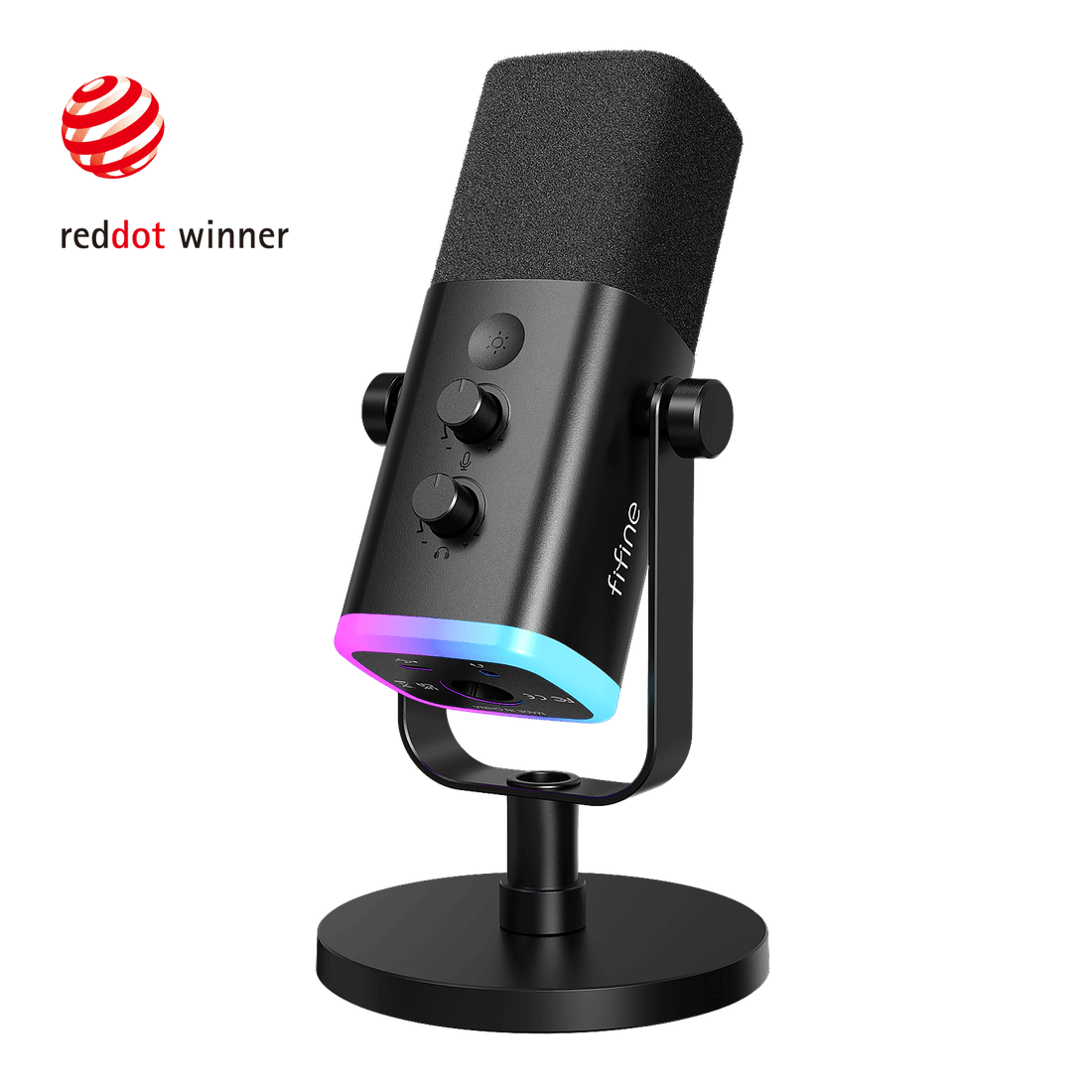
The FIFINE AM8 is the strongest low-cost choice for voice lessons in a bedroom, living room, or other untreated space. Its dynamic design picks up sound most clearly when the student stays close to it, which helps reduce household noise and room echo.
The AM8 connects through USB for immediate use and also includes an XLR output if the student adds an audio interface later. Its USB controls include microphone gain, headphone volume, direct monitoring, and touch-to-mute. A desktop stand and USB cable are included.
The microphone’s RGB lighting may not appeal to every family, but it can be turned off. More importantly, the AM8 gives beginners useful controls at a price close to that of many basic USB condensers.
Best for:
Voice students, spoken exercises, songwriting, and rooms with background noise.
Keep in mind:
A dynamic microphone needs to stay fairly close to the singer. It isn’t the best choice when one microphone needs to capture both the student’s voice and a large instrument from across the room.
Approximate price:
$58
2. RØDE NT-USB Mini
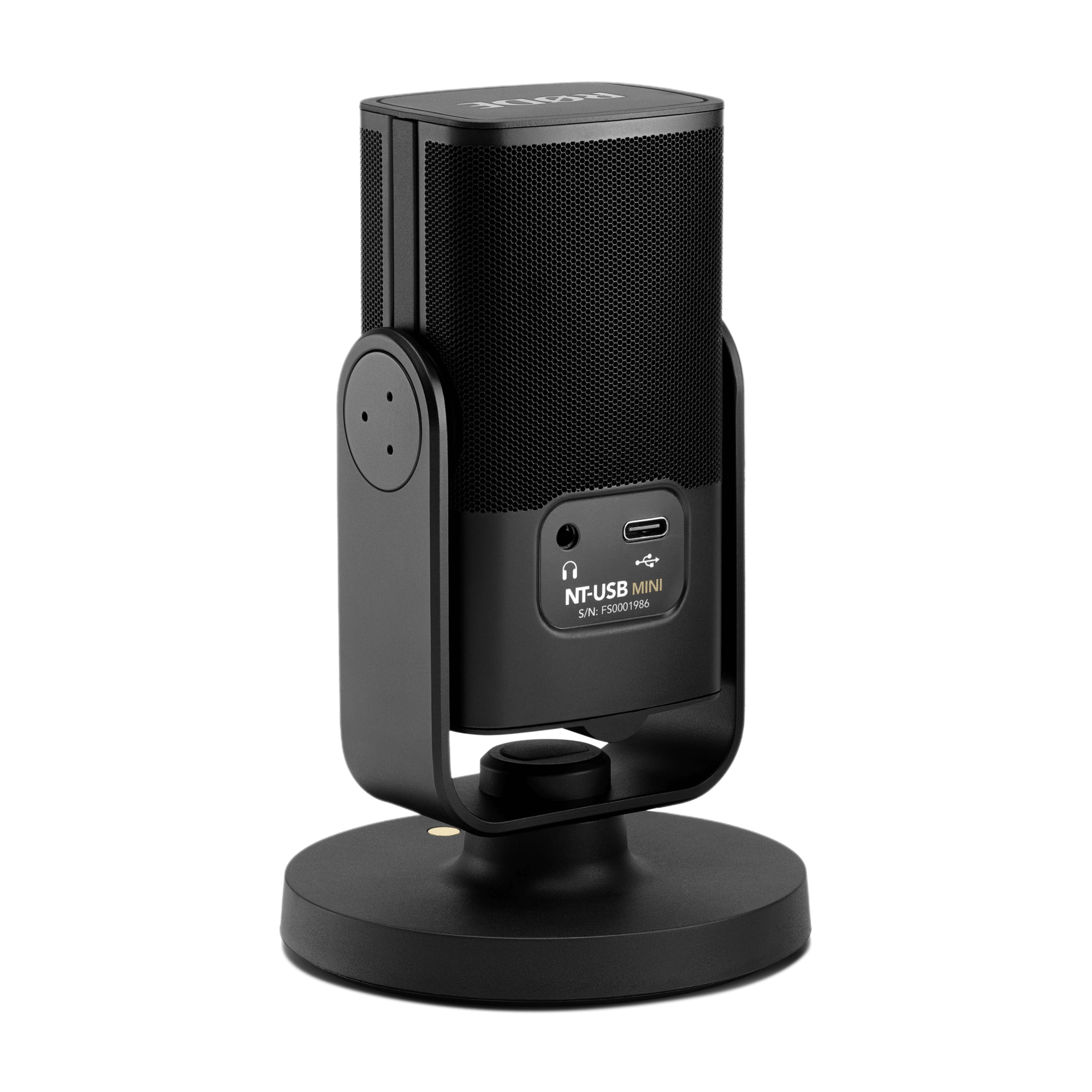
The RØDE NT-USB Mini is a compact condenser microphone that works well for voice, acoustic guitar, and general online lessons in a relatively quiet room. It connects directly to a computer or compatible tablet and doesn’t require additional drivers.
Its cardioid pickup pattern focuses on the student or instrument in front of it. The microphone also includes a built-in pop filter, zero-latency headphone monitoring, a magnetic desktop stand, and a mount that can be attached to a microphone arm.
The NT-USB Mini captures more room detail than a dynamic microphone. That can help a teacher hear an acoustic instrument more naturally, although it may also pick up fans, keyboard taps, and activity elsewhere in the room.
Best for:
Voice, acoustic guitar, composition, and students who want a compact desktop setup.
Keep in mind:
It performs best in a quiet room with curtains, carpeting, furniture, or other soft surfaces that reduce echo.
Approximate price:
$100
3. Zoom H1essential
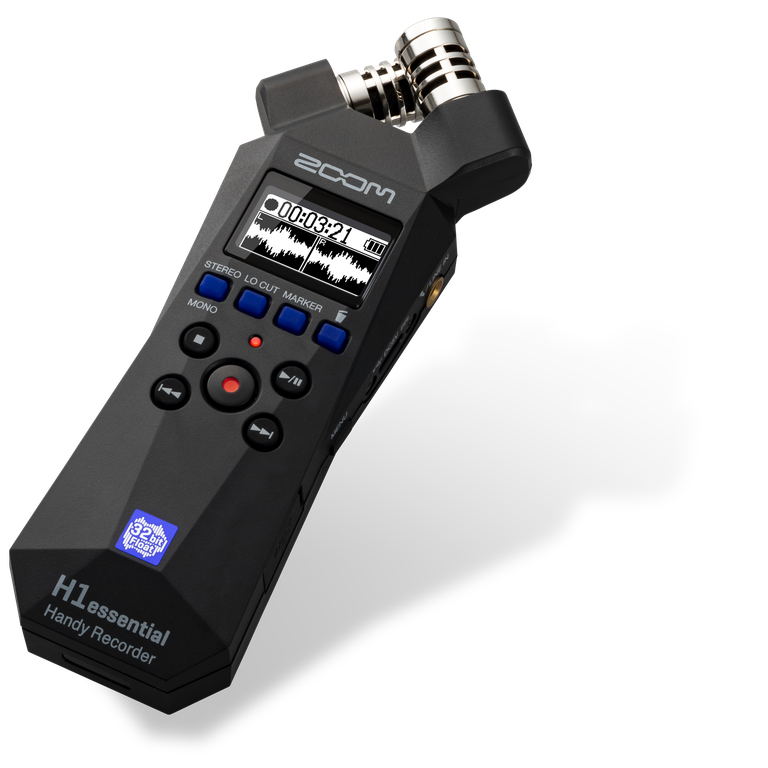
The Zoom H1essential is both a portable recorder and a USB microphone. Its built-in X/Y microphones capture stereo sound, making it particularly useful when a teacher needs to hear a piano, string instrument, ensemble, or a wider part of the room.
When connected through USB-C, it can work as a microphone with a PC, Mac, compatible iOS device, or Android device. It can also record a lesson, rehearsal, or practice session to a memory card at the same time.
Unlike a traditional vocal microphone, the H1essential doesn’t need to sit directly in front of the student’s mouth. It can be placed far enough away to capture the full instrument and the student’s speaking voice. This makes it one of the most flexible choices for families who use the same setup for several instruments.
Best for:
Piano, violin, viola, cello, flute, small ensembles, and recording practice sessions.
Keep in mind:
Its stereo microphones capture more of the room, so careful placement matters. A small tripod may also be needed to position it securely.
Approximate price:
$110
4. Audio-Technica AT2020USB-X
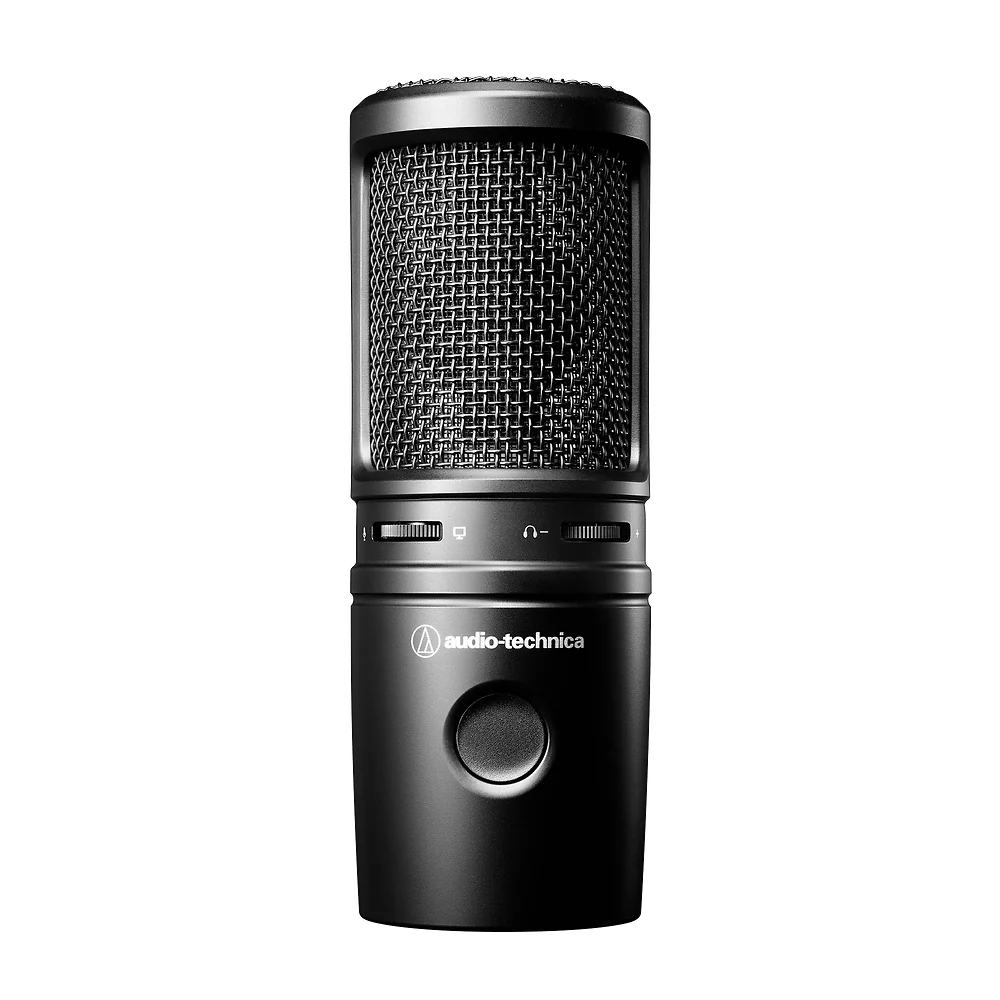
The Audio-Technica AT2020USB-X is the step-up choice for students who want detailed sound for lessons, auditions, recordings, or original music projects. It combines the sound of Audio-Technica’s established AT2020 design with direct USB-C connectivity.
The microphone records at up to 24-bit and 96 kHz and includes a headphone jack, headphone volume control, monitor mix control, and silent touch mute. It also comes with a desktop stand, USB cable, and adapter for computers with different USB ports.
Its condenser capsule captures vocal tone and instrumental detail clearly. That makes it suitable for serious voice students, acoustic musicians, and students who want to record between lessons.
Best for:
Voice, acoustic instruments, audition recordings, songwriting, and home music production.
Keep in mind:
Its sensitivity can reveal room echo and background noise. Students will get better results in a quiet space with the microphone aimed away from fans, windows, and other noise sources.
Approximate price:
$169
Should You Choose a Dynamic or Condenser Microphone?
Choose a dynamic microphone when the student takes lessons in a noisy or echoey room and can remain close to the microphone. Choose a condenser microphone when the room is quiet and the teacher needs to hear more detail from the voice or instrument.
A stereo microphone such as the Zoom H1essential is often more useful for piano or situations where one device needs to capture a wider area. For a singer at a desk, a cardioid dynamic or condenser microphone will usually provide more focused sound.
How Should You Set Up a Microphone for Online Lessons?
Place the microphone where it captures the instrument clearly without blocking the teacher’s view. Test the setup before the first lesson and ask the teacher whether the balance, distance, or input level needs to change.
For voice lessons, position the microphone close enough to capture the singer without forcing them to lean forward. A pop filter can soften bursts of air from consonants.
For piano lessons, place the microphone where it can hear both the keyboard and the student’s voice. The ideal position will vary between acoustic pianos, digital pianos, and keyboards.
For guitar and string lessons, begin with the microphone between the student and the instrument rather than pointing it directly into the loudest part of the instrument. The teacher can then help adjust the position.
Select the external microphone as the input device in the lesson platform. Using wired headphones designed for music practice can reduce echo and prevent the microphone from picking up the teacher’s voice through the computer speakers.
Can You Use One Microphone for Different Instruments?
One microphone can support several types of online lessons, especially when it has flexible placement and a cardioid pickup pattern. The RØDE NT-USB Mini is the strongest general-purpose option in this list, while the Zoom H1essential offers more flexibility for pianos, strings, and wider sound sources.
Families exploring different beginner music programs don’t need to buy specialized equipment immediately. A versatile USB microphone can support lessons now and continue serving the student as their interests develop.
Find the Right Setup for Online Music Lessons
A clear microphone for online lessons helps the teacher hear what the student is doing and provide more useful feedback. The best setup doesn’t need to be complicated or expensive.
Book a music consultation with James Daly, the director of San Ramon Academy of Music, to discuss your child’s instrument, goals, lesson format, and equipment needs.
