
Voice Lessons
What Age Can a Child Start Voice Lessons?
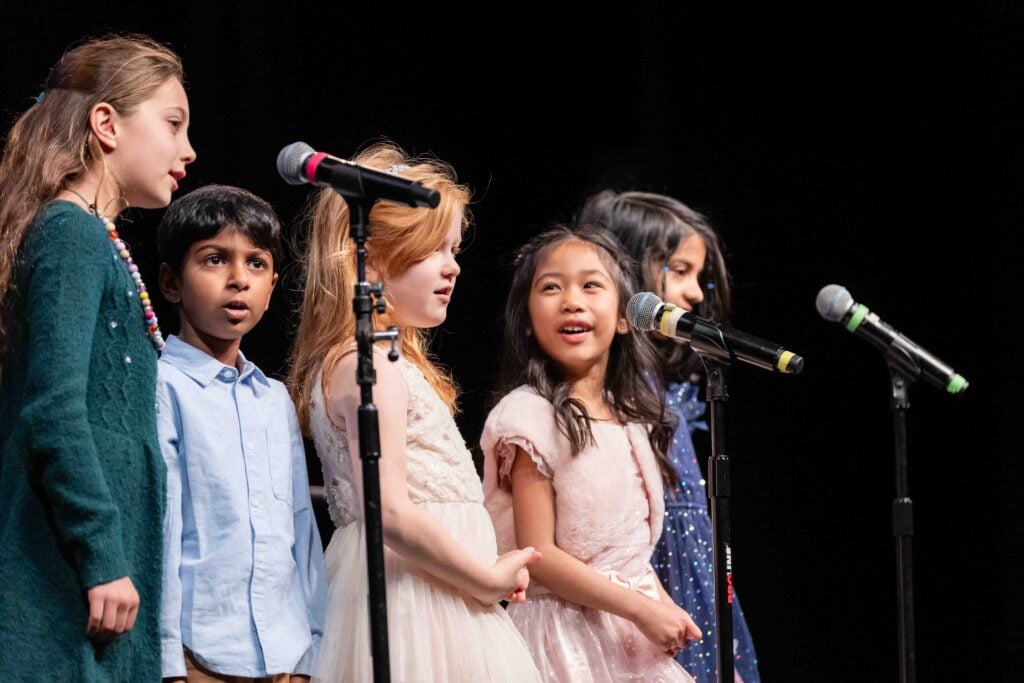
What Age Can a Child Start Voice Lessons?
Most children can start private voice lessons around ages 7 to 9, once they can follow instructions for 30-45 minutes and match pitch consistently. Children ages 3 to 6 do better in playful group music or early childhood singing classes. Teens can start anytime, with extra care during voice change.
Why Do Voice Lessons Usually Start Later Than Piano or Violin?
Voice lessons usually start later because a child’s voice is part of a growing body. The vocal folds, vocal tract, breathing control, and ability to coordinate what they hear with the sound they make continue developing throughout childhood.
Piano and violin are external instruments that a child can see and touch. Singing requires children to coordinate muscles they can’t see while listening closely to pitch, managing their breath, and following instructions about sound.
Young children can still sing, explore pitch, and develop rhythm. The lesson simply needs to match their age. If instruction focuses too soon on volume, range, or copying an adult sound, a child may learn to push instead of singing comfortably.
This is one reason children can often begin piano at a younger age. The visible layout and immediate response of the keys make the earliest skills easier to demonstrate.
What Age Should Kids Start Singing Lessons?
Most kids should start formal singing lessons between ages 7 and 9. Before that point, group music and singing games usually provide a more natural way to develop the listening, rhythm, and pitch skills they’ll eventually use in private lessons.
| Age range | Best starting format | Typical lesson length |
| Ages 3 to 5 | Group music and singing games | 20 to 30 minutes |
| Ages 6 to 8 | Group singing, choir, or short private lessons | 30 to 45 minutes |
| Ages 9 to 12 | Private voice lessons | 30 to 45 minutes |
| Ages 13 and up | Private lessons based on the student’s goals | 30 to 45 minutes |
Ages 3 to 5
Children between 3 and 5 are developing pitch awareness, rhythm, language, listening, and basic control over their breathing. They learn best when singing is combined with movement, clapping, repetition, and imagination.
Can toddlers take singing lessons? They can participate in parent-and-child music classes and playful group singing, but formal private technique isn’t the right format yet. At this age, the goal is to help children enjoy using their voices and respond to musical patterns.
Watch for signs of discomfort or frustration. Young children shouldn’t be asked to sing loudly, repeat corrections for long periods, or perform before they’re comfortable.
Ages 6 to 8
Ages 6 to 8 are a transition period. Children are developing longer attention spans, more consistent pitch matching, and a greater ability to repeat musical instructions.
Most still do well in group singing or choir, but some are ready for short private lessons. Voice lessons for 7-year-olds should usually last 30 to 45 minutes and include plenty of singing, movement, and variety rather than a long sequence of technical exercises.
A child may be ready if they can work comfortably with an adult, copy simple pitches, and try something again after receiving gentle feedback. If they lose interest after a few minutes or become upset by corrections, a group setting may be the better starting point for now.
Ages 9 to 12
Ages 9 to 12 are often the sweet spot for starting private voice lessons. Attention, musical memory, listening, and physical awareness are developed enough for children to understand how a small change in breathing or posture affects their sound.
Lessons can begin introducing healthy breathing, pitch accuracy, phrasing, expression, and age-appropriate repertoire. Children can also work toward personal goals such as preparing a favorite song, auditioning for a musical, or building the confidence to sing in front of others.
The teacher should keep the child within a comfortable range and select music that suits their age. The goal isn’t to make a young singer sound older, but to help them use their voice with greater confidence and control.
Ages 13 and Up
Teenagers can begin voice lessons at any time, including while their voices are changing. Puberty can affect range, tone, volume, and control, but it doesn’t mean a student needs to stop singing.
Boys often experience a more noticeable drop in pitch, while girls may notice subtler changes. A teacher can adjust the key, repertoire, and technical expectations as the student’s comfortable range shifts.
A study of more than 200 trained and untrained singers ages 8 to 18 found measurable differences in voice production connected with age, sex, and singing training. This reinforces the importance of teaching the voice a student has now rather than pushing them to reproduce sounds that were easier before puberty.
How Do You Know If Your Child Is Ready for Private Voice Lessons?
A child is ready for private voice lessons when their interest in singing is matched by enough attention, listening, and emotional readiness to participate. They don’t need previous training or a naturally powerful voice.
Use these six signs as a practical checklist.
- They sing without being prompted. Your child regularly chooses to sing while playing, riding in the car, or spending time at home.
- They can copy a simple pitch. When you sing one note or a short pattern, they can make a recognizable attempt to repeat it.
- They can work with an adult for 30 minutes. They’re able to stay involved when an activity includes listening, repetition, and trying something more than once.
- They want to share their singing. They ask to sing for family members, participate in performances, or record themselves.
- They can accept gentle corrections. They’re willing to make an adjustment without feeling that every correction means they sang badly.
- They have a song they want to learn. A specific song gives the teacher an immediate way to connect lessons with something the child already enjoys.
Is It Ever Too Early or Too Late to Start Singing Lessons?
It’s never too early to enjoy singing, but toddlers and preschoolers usually get more from playful group music than formal private instruction. Singing together, copying short melodies, and moving to music can build valuable skills without asking a young child to focus on technique.
It’s also never too late to begin. Teenagers and adults can start from their current range and experience level, whether they want to improve their technique, prepare for a performance, or simply enjoy singing more comfortably.
What Happens in a Child’s First Voice Lesson?
A child’s first voice lesson is a relaxed introduction, not an audition. The teacher listens to how the child naturally sings, introduces a few simple activities, and learns what kind of music makes them feel interested and comfortable.
During the first 30 minutes, the teacher may ask about favorite songs, singers, or musicals. The child might try a light physical warm-up, a breathing game, or a short call-and-response activity. They’ll usually sing part of a familiar song and experiment with one manageable adjustment involving posture, rhythm, breathing, or pitch.
The teacher is also listening for the child’s comfortable range and watching how they respond to instructions. This helps shape future voice lessons around the student’s age, goals, and current abilities.
A young child won’t be asked to belt, force high or low notes, complete long technical drills, or perform on the first day. Parents can sit in during lessons at San Ramon Academy of Music, which can help the child settle in and make it easier to understand what they should practice at home.
What Can a Child Do Before They’re Ready for Private Voice Lessons?
Children who aren’t ready for private lessons can still develop pitch, rhythm, listening, and confidence through group music and simple singing activities at home.
Families in San Ramon and across the Tri-Valley can explore group classes that use singing, rhythm, and movement in a social setting. Choir can also be a good option for children who enjoy singing with other people and feel more comfortable participating as part of a group.
At home, parents can keep musical activities simple:
- Sing familiar songs together
- Copy short sounds back and forth
- Clap or move to the beat
- Let your child choose the song
- Use comfortable starting notes
- Stop when the child loses interest
- Avoid correcting every note
Short activities woven into the day can be more useful than trying to recreate a formal lesson. These easy daily music activities can help families build musical skills without adding another demanding routine.
FAQs
Is 5 Too Young for Voice Lessons?
Five is usually too young for formal private voice lessons. Most 5-year-olds will learn more through singing games, movement, early childhood music, or a group class that keeps instruction playful.
A short private lesson may work for an unusually focused child, but it should still centre on exploration rather than technical training.
Can Voice Lessons Damage a Child’s Voice?
Age-appropriate voice lessons shouldn’t damage a child’s voice. A qualified teacher will encourage comfortable singing and won’t push the child to sing louder, higher, or lower than feels natural.
A 2019 study of 1,495 children between ages 8 and 14 found that choir singers didn’t have a higher rate of voice disorders than nonsingers. The study doesn’t prove that choir prevents voice problems, but it supports the point that appropriately guided singing isn’t harmful.
How Long Should a Voice Lesson Be for a 7-Year-Old?
A voice lesson for a 7-year-old should usually last around 30 minutes. That gives the teacher enough time to include singing, listening, movement, and one or two simple teaching points without asking the child to concentrate for too long.
If the student remains engaged and wants to continue, the lesson length can increase as they get older.
Should My Child Learn Piano Before Voice?
Your child doesn’t need to learn piano before starting voice lessons. Piano can help with pitch, rhythm, and reading music, but those skills can also be introduced during singing lessons.
Some children eventually study both instruments, while others remain focused on voice. Interest and readiness matter more than completing them in a particular order.
What Age Do Boys’ Voices Change and Should They Stop Lessons?
Boys’ voices usually change during puberty, although the timing and pace are different for every child. A changing voice may become lower, less predictable, or temporarily harder to control.
There’s no need to stop lessons. The teacher should adjust songs, keys, range, and expectations so the student can continue singing comfortably while the voice develops.
How Can You Tell Whether Your Child Is Ready to Begin?
The right time to start comes when your child wants to sing and can participate comfortably in the kind of lesson available to them. That may mean private instruction at age 7, choir at age 6, or another year of singing through play.
If you’re still unsure, book a 15-minute music consultation with James Daly, SRAM’s Academy Director. James can learn about your child’s age, interests, and previous musical experience and help you decide whether private voice lessons, group singing, or another starting point makes the most sense.
