
Group Lessons for Children, Lesson Tips for Parents and Children, Music Activities for Children, San Ramon Academy of Music
Should You Choose Guitar or Piano Lessons for Your Child?
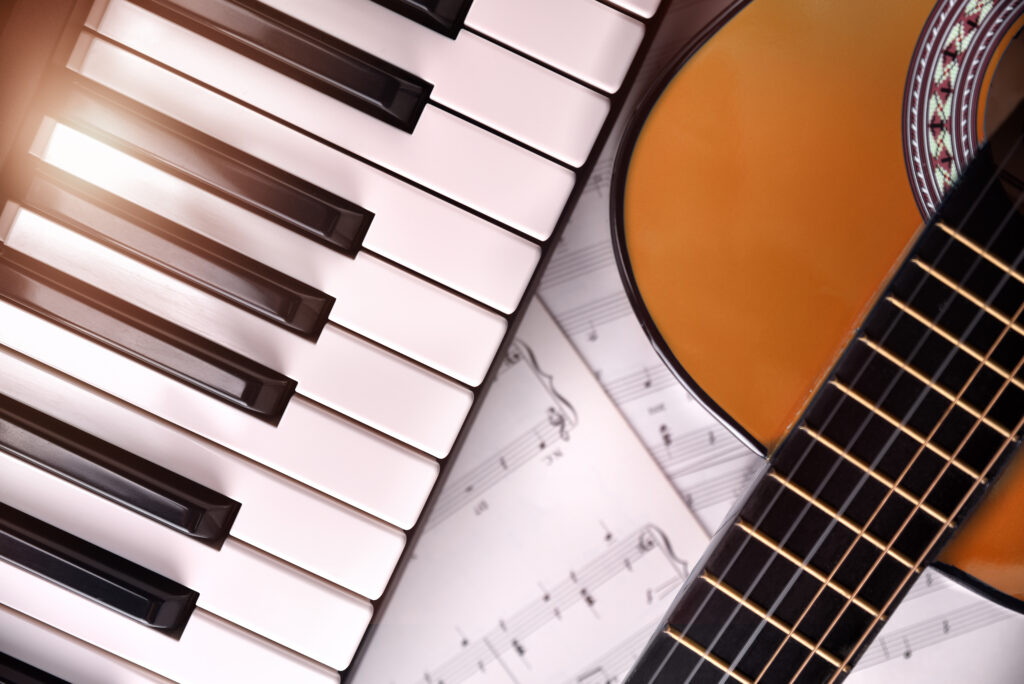
Should You Choose Guitar or Piano Lessons for Your Child?
- Piano lessons are a great fit for ages 5 and up, while the guitar often clicks best from ages 7 to 9, when hands are a bit stronger.
- Piano lets kids jump into songs quickly and explore everything from classical to pop, while guitar builds skills for strumming, soloing, and jamming with friends.
- Piano is perfect for kids who love patterns and structure, and guitar is ideal for those who want to play, perform, and create in their own style.
What Kids Learn from Guitar or Piano Lessons
When a child starts guitar or piano lessons, they’re learning more than just music. They’re building skills that will stick with them for life.
Music fundamentals come first. Kids discover how to read music, keep a steady rhythm, and train their ears to recognize melodies and harmonies. These skills become the foundation for any instrument they might want to play in the future.
Each instrument also develops unique abilities.
- Piano helps children coordinate both hands, see how notes are laid out visually, and understand patterns in music.
- Guitar builds finger strength, flexibility, and rhythm through chord changes, scales, and strumming.
However, research shows that music lessons bring cognitive and academic benefits that go far beyond the keys or strings.
Discipline and focus grow naturally when kids show up, practice regularly, and see their progress. Creativity starts to shine as they experiment with making music their own. And every time they master a new song, their confidence grows, which prepares them for moments on stage and in life.
At San Ramon Academy of Music, our instructors know how to guide each student’s learning journey so they not only master their instrument but also discover the joy and pride that comes from making music.
Understanding the Learning Curve
Every instrument has its own path to mastery, and the learning curve for guitar and piano is different.
With the piano, beginners often find it easier to play simple songs early on. The keys are laid out in a clear, visual pattern, and each note produces the right sound immediately – no finger strength or precision tuning required. This makes the piano a great first instrument for younger kids who thrive on quick wins and visible progress.
Guitar can take a bit more time at the start. Students must build finger strength, learn how to press strings cleanly, and coordinate both hands for chords and strumming. It can feel tricky at first, but once these basics click, guitar students often enjoy more freedom to explore styles like rock, pop, and folk.
The key is understanding that progress looks different for every child. Some will soar quickly, while others will grow steadily over time. At San Ramon Academy of Music, we match the teaching pace to each student’s needs, ensuring they feel encouraged and supported no matter where they are in their learning journey.
Age and Physical Readiness
Choosing between guitar and piano often comes down to when your child is ready to start music classes, both mentally and physically.
For piano, most children can begin as early as 5 years old. The keys are easy to press, and there’s no need to develop finger calluses or worry about hand size. Young beginners can focus on rhythm, listening skills, and basic note reading without being held back by physical limitations.
Guitar may require a little more patience, as it’s harder to press down strings and form chords cleanly with smaller hands. Many kids do well starting around ages 7–9, when their finger strength and coordination are more developed. That said, with the right-sized guitar and proper guidance, motivated younger students can succeed too.
We help parents choose the right time to start and the right instrument size for their child. The goal is to set kids up for success from their very first lesson, so they feel confident, capable, and excited to keep learning.
Musical Interests and Personality Fit
Kids are more likely to stick with lessons when the instrument matches their personality and musical taste.
For children who love structure and enjoy following clear patterns, the piano can be a perfect fit. The layout of the keys makes it easy to see how music works, and the variety of classical, pop, and movie themes available keeps practice engaging.
For kids drawn to creativity and self-expression, the guitar often feels more natural. They can strum along to favorite songs, explore different genres, and even start creating their music early on.
It’s also worth paying attention to what music your child listens to or talks about. Do they light up when they hear a movie soundtrack or a symphony? Or do they gravitate toward rock bands, singer-songwriters, or acoustic performances? These cues can point you toward the instrument that will inspire them most.
The best choice is the one that keeps them excited to play, practice, and explore because enthusiasm is the real fuel for progress.
Practical Factors for Parents
Sometimes the deciding factor between guitar and piano lessons isn’t about music at all, but what works best for your family’s lifestyle. Here are a few things to think about:
- Space at home – A piano or keyboard needs a dedicated spot, while a guitar can be stored almost anywhere.
- Noise level – Acoustic pianos can be loud, but digital pianos and electric guitars allow for headphone practice.
- Cost – Entry-level guitars are more affordable than pianos. Digital keyboards can be a budget-friendly alternative to acoustic models.
- Maintenance – Pianos require regular tuning, while guitars need occasional string changes.
- Lesson flexibility – If your schedule is unpredictable, a portable instrument might make practice easier.
Long-Term Opportunities and Benefits
Once a child gains confidence with their instrument, a whole world of benefits and possibilities opens up. What starts as a weekly lesson can grow into performances, creative projects, and experiences that shape their future in music. These are the kinds of opportunities that keep kids motivated and excited to play:
- Joining a band or orchestra – Guitar players might end up jamming in a rock band, while pianists could accompany school choirs or play in jazz ensembles.
- Songwriting and composing – Once they know the basics, kids can start creating their music, turning ideas in their heads into real songs.
- Competitions and festivals – From local talent shows to regional music festivals, there are countless chances to shine.
- Recording and sharing music – With today’s tech, students can record at home, share their performances online, and even collaborate with friends across the globe.
- Lifelong social connections – Music has a way of bringing people together, whether it’s playing for family gatherings, at community events, or with friends for fun.
Let’s Find the Instrument Your Child Will Love
Choosing between guitar or piano lessons is about discovering which instrument makes your child light up when they play. Both offer valuable skills, creative outlets, and opportunities that can grow for a lifetime.
A trial lesson lets your child experience the sound, feel, and excitement of each instrument. You can see their reaction, and they can discover which one inspires them to keep playing long after the lesson ends.
In addition, the full attention of an experienced teacher helps students stay motivated, overcome challenges, and celebrate every milestone.
Book a free trial lesson and start your child’s musical journey.
