
Benefits of Learning Music, Music Lessons, San Ramon Academy of Music
Why Learning an Instrument Matters in the Age of AI
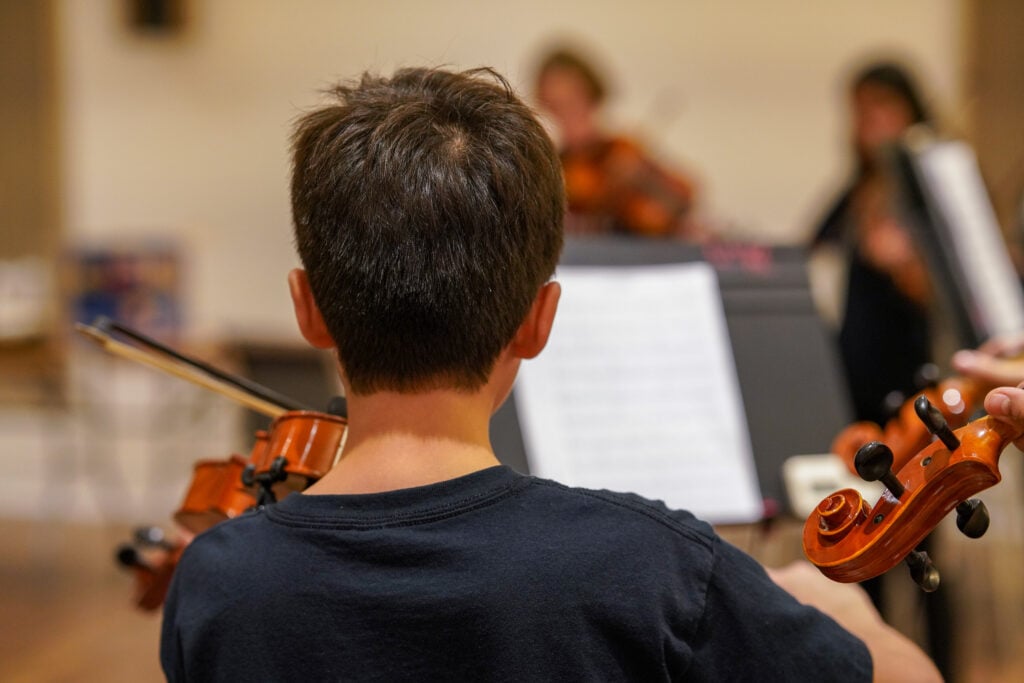
Why Learning an Instrument Matters in the Age of AI
- Learning an instrument gives children a real skill they have to build through practice, patience, and focus.
- AI can generate songs, but it cannot replace the human experience of learning, performing, listening, and expressing emotion through an instrument.
- For children, music lessons can become a way to build confidence, creativity, discipline, and connection in a world where many things feel instant or automated.
Can AI Replace Learning a Musical Instrument?
AI can now create songs in seconds. It can write lyrics, generate melodies, and imitate musical styles that once took years to study. For parents, that raises a fair question. If technology can make music so quickly, does learning piano, voice, guitar, violin, cello, or another instrument still matter?
It does. In many ways, it matters more.
AI can produce music, but it cannot replace the growth that comes from a child learning to make music themselves.
That difference matters. A finished song is an output. Learning an instrument is a process.
A child who sits at the piano, picks up a violin, sings through a difficult phrase, or works through a rhythm on drums is doing much more than creating sound. They are learning how to focus, how to listen, and how to keep going when something doesn’t work the first time.
A review of music training and executive function found benefits in areas like inhibitory control, working memory, and cognitive flexibility, which are exactly the kinds of skills children practice when they learn an instrument.
Why Does Human Music Feel Different?
Human music feels different because there is real effort, emotion, and intention behind it. When a student sits down at a recital and plays a piece they have worked on for months, everyone in the room can feel the work behind the moment. Maybe they were nervous. Maybe they missed notes in practice. Maybe they had to repeat the same measure again and again before it finally clicked.
Then they perform.
That moment means something because it was earned. The music carries the student’s time, attention, courage, and growth. That’s very different from clicking a button and generating a track.
AI-generated music can sound impressive. It can be useful, interesting, and even beautiful. But when a child plays music themselves, the meaning comes from the person behind the sound.
A parent hearing their child play a first song at home is not proud because the song is technically perfect. They are moved because they know the child worked for it.
Why Is Music One of the Hardest Things to Fake?
You either put in the time or you didn’t. That is one reason music feels so important in a digital world. So much can be edited, filtered, generated, or automated. A photo can be retouched. A paragraph can be rewritten. A song can be produced by software. But when a student plays an instrument live, the skill is right there.
The rhythm shows it. The tone shows it. The posture shows it. The confidence shows it. The ability to recover from a mistake shows it too.
A student playing their first recital is not just playing notes. They are showing something real that they built over time.
That kind of performance is an honest signal. It shows practice, patience, and the quiet work that happened long before anyone was watching.
How Does Music Help Children Build Meaning in an Automated World?
Music gives children a long-term path of progress, which becomes more valuable when so much of life is instant.
AI gives fast answers. Music teaches earned progress.
A child doesn’t become a strong musician overnight. They learn one note, then one phrase, then one song. They learn how to practice. They learn how to listen to feedback. They learn how to try again without treating every mistake like a failure.
That kind of growth can become deeply meaningful.
There is always another level in music. A beginner can learn a first song. A more experienced student can prepare for a recital. A singer can work on breath control and tone. A pianist can move from simple melodies into more expressive pieces. A string student can join an orchestra or chamber music group.
The ceiling stays high, and that is part of what makes music so special.
Music education has also been linked with self-esteem in children and adolescents, which makes sense when students get to see and hear their own progress over time.
Why Does Playing Music Still Connect People So Deeply?
Music gives children a way to share emotion and belong to something bigger than themselves.
Private lessons are often where the journey begins. A child works one-on-one with a teacher, builds fundamentals, and starts to understand what their instrument can do. Over time, that musical journey can grow into recitals, choir, orchestra, chamber ensembles, summer camps, and playing with other students.
That community piece matters.
AI doesn’t replace the feeling of making music with other people. It doesn’t replace the moment when a child listens for their part in an ensemble. It doesn’t replace the pride of performing for your family. It doesn’t replace the friendships that can form when students care about music together.
Music asks children to listen beyond themselves. They learn when to lead, when to follow, when to wait, and when to come in with confidence.
That is part of why music education still matters so much. It gives children a way to connect in a world that can often feel fast, digital, and disconnected.
What Is the Best Way to Help Your Child Start Music?
The best first step is not choosing the perfect instrument or mapping out the next ten years of your child’s musical life. The goal is to give your child a positive first experience with a teacher who can meet them where they are.
Some children are drawn to the piano because they like seeing the notes in front of them. Some love voice lessons because they are already singing around the house. Some are excited by the guitar, violin, cello, or another instrument because of a song they heard, a friend they watched, or a performance that stayed with them.
That curiosity is worth paying attention to.
A good teacher can help turn that curiosity into momentum. The early goal is to help the child feel comfortable, supported, and excited to keep going.
From there, music can grow naturally. The first song becomes the next song. A private lesson becomes a recital goal. A quiet beginner becomes a student who is proud to share what they have learned.
The Future of Music Is Still Human
AI will keep changing how music is created and shared. But that doesn’t make learning an instrument less valuable. It makes it more human.
A child who learns music is learning how to focus, listen, practice, express emotion, and share something real. In a world where more things can be generated instantly, that kind of earned growth matters.
If your child has been curious about music, San Ramon Academy of Music would love to help them take the next step. We offer private lessons for piano, voice, guitar, violin, viola, cello, and other instruments, with supportive teachers who can help your child build real skills over time.
Start private lessons and help your child build something AI cannot replace.
