
Benefits of Learning Music, Group Lessons for Children, Lesson Tips for Parents, Lesson Tips for Parents and Children, Music Activities for Children, Music Lessons, Music Recital, Piano Lessons, San Ramon Academy of Music, Violin Lessons, Voice Lessons
Are There Reviews for San Ramon Music Academies?
Are There Reviews for San Ramon Music Academies?
- Families can find reviews for San Ramon music academies on Google and other local directories.
- The most useful reviews reveal how teachers work with individual students, whether children make progress, and how well the school supports families.
- These examples from San Ramon Academy of Music highlight the kinds of details that can help families compare different schools and understand what to look for in a program.
How Reviews Help Families Compare San Ramon Music Schools
San Ramon families can choose from several music academies, community programs, and private studios. Reviews are one of the clearest ways to look beyond program lists and understand what lessons may actually feel like for a child.
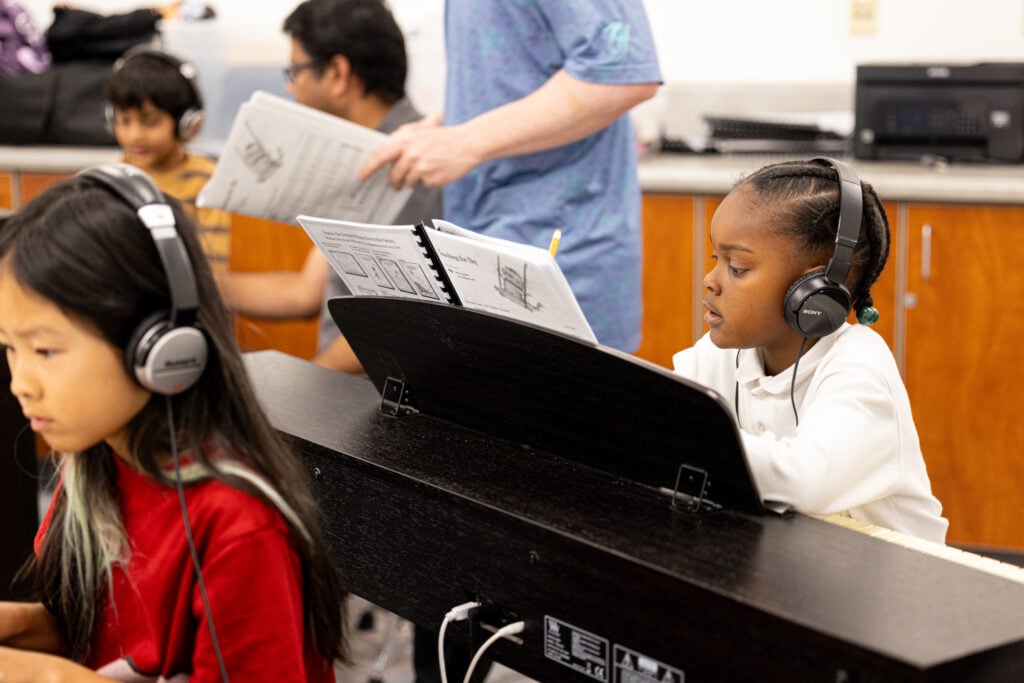
One of those schools is San Ramon Academy of Music, commonly called SRAM. Founded by pianist and composer James Daly in 2018, SRAM offers private lessons, group classes, summer camps, recitals, chamber ensemble, youth string orchestra, and virtual instruction. Families can attend programs at its Dougherty Station and Satellite campuses.
Each review highlights a different part of the SRAM experience. Together, they show what that experience can look like from a child’s first lesson through years of study, recitals, and ensemble work.
What Should You Look for in San Ramon Music School Reviews?
Star ratings provide a quick impression, but the written comments usually tell you more. As you compare reviews, look for evidence of the following:
- A teacher who understands the individual student. Strong reviews describe how the teacher adapts lessons to the child’s personality, learning style, interests, or experience.
- Enjoyment and steady progress. Children should feel encouraged, but parents should also be able to see that they are developing real skills.
- Support between lessons. Clear practice instructions, lesson notes, responsive administration, and convenient scheduling can make the experience easier for the whole family.
- Programs that allow students to grow. A school should offer an appropriate starting point and opportunities to progress into private lessons, ensembles, performances, or more advanced study.
- Welcoming performance opportunities. Recitals can give students a goal, help them manage nerves, and let families celebrate their progress.
The Right Teacher Can Change How a Child Feels About Music
Naman’s daughter came to SRAM after piano lessons elsewhere often ended in tears. After five months with SRAM piano instructor Joshua Susic, her experience had changed:
“We had a piano teacher before we started with Josh. After every lesson my daughter would be crying. Now five months with Josh and she really enjoys piano. She now looks forward to her lessons. I can see she is learning and enjoying music.”
Larkin also noticed how much the right teaching approach matters. Her family joined SRAM in 2018, and both of her children have taken piano and singing lessons:
“James Daly, owner and piano instructor, is AMAZING! He tailors his teaching approach to each child’s learning style (auditory, visual, kinesthetic). His passion for music education comes through all aspects of SRAM. He keeps lessons engaging while challenging to achieve growth.”
Fun and Personal Connection Keep Students Engaged
Learning an instrument requires patience. That’s especially true when a young child chooses an instrument that can feel difficult at first.
Amy’s young son takes cello lessons with SRAM instructor Esther Cynn. Amy described how Ms. Esther uses fun and personal connection to keep him interested.
“The way she integrates fun and personal connection into her lessons is amazing. It makes the process of learning a wonderful experience for students. Although cello is a little hard for a young kid, with Ms. Esther, he would like to learn more about it!”
Berly’s daughter was completely new to voice lessons when she began studying with instructor John. Her review describes the excitement that continued beyond the weekly lesson.
“This is my daughter’s first time taking voice lessons. And she loves her lesson with John. She looks forward to it every week and sings almost non-stop! The team is also very supportive and flexible, Tenisha and John are the best!!”
Patient Teaching Creates Steady, Visible Progress
Parents naturally want to know whether their child is progressing. They want progress that feels steady and appropriate for the student, rather than rushed.
At SRAM, we make that progress possible.
Tassnim’s daughter had no previous experience with a musical instrument when she began piano lessons with SRAM instructor Lauren Park. After two months, Tassnim was pleased with both the pace and the support her daughter received:
“I am very satisfied with her overall progress. She is learning at a nice and steady pace. Ms. Lauren is a wonderful teacher. She is very patient and helpful.”
For a beginner, steady progress builds trust. The child begins to recognize notes, play short pieces, and understand what to practise next. Each small improvement provides evidence that the work is paying off.
Over several years, those early wins can grow into much larger achievements. For example, Theodore’s sons studied with James for six and eight years, progressing from no musical knowledge to passing ABRSM examinations.
ABRSM stands for the Associated Board of the Royal Schools of Music, which provides internationally recognized graded music examinations for practical performance and music theory.
“Aside from musical ability, my sons also treasure the most important life lessons on perseverance and resilience through constant learning & challenges that shape their characters.”
That’s the larger transformation many families hope music education will support. A child learns an instrument while also discovering what consistent effort can make possible.
Support Between Lessons Makes Progress Easier
The lesson may last for part of an hour, but most musical growth happens across the rest of the week. Parents and students need to know what to practice and how to continue the work at home.
Jenny wrote her review after her two children had attended SRAM for three months and studied piano with one of our instructors. She highlighted the practical support surrounding each lesson.
“I appreciate the teacher notes that include a recap and HW assignment which gets emailed after every lesson. I also appreciate having the option to sit in on the lessons. The portal is user friendly and convenient for scheduling.”
For a busy family, lesson notes, practice assignments, scheduling tools, and the option to observe can make weekly progress much easier to support.
Students Can Grow Across Programs and Locations
A child’s needs may change as their skills and confidence develop. Some begin in a group class before moving into private lessons. Others add chamber music, voice, or another instrument as their interests expand.
Chandrika’s children had attended SRAM for a year when she wrote about their experience with group classes, individual lessons, and chamber music. Her family had also used both San Ramon campuses:
“They have done chamber music, group lessons and individual lessons. We’ve had a great experience with the teachers and the staff. They go to both Dougherty Station Campus and the Satellite Campus. Both are great locations.”
SRAM offers multiple ways for students to learn, including private lessons, group classes, chamber ensemble, and youth string orchestra. That variety allows a student’s musical journey to develop without forcing every family into the same path.
Cherie’s family had been with SRAM for two years. Her daughter began in a group piano class before moving into private lessons, while her son later started a beginner group class. Cherie valued having a path that matched each child’s needs:
“I like that there’s no pressure on the kids. I am not looking for my kids to achieve titles and certification, I just want them to enjoy and have fun, be able to read music notes.”
Cherie also praised the teachers, responsive administration, and recital included at the end of the session. She was happy enough with the experience to recommend SRAM to two friends who subsequently enrolled their children.
Recitals Turn Practice Into Confidence
Performance gives students something concrete to work toward. A piece that began slowly in a lesson becomes music they can share with an audience.
In the same review about her daughter’s first months of piano lessons, Tassnim described what happened when her daughter participated in a recital:
“My daughter participated in one of the recitals and loved it thoroughly. The recital was neatly arranged and helped little ones gain confidence while performing in front of an audience.”
That experience matters because confidence rarely arrives before a student steps onto the stage. It develops through preparing carefully, managing the nerves, and discovering they can finish the piece.
Student reviewer Divij focused on how it felt to take part. He described an organized and welcoming school where recitals were enjoyable to play:
“This is an amazing place to learn music. Students are made welcome, and everything is well organized. The recitals are a joy to play at.”
Recitals and community performances also help children see themselves as part of something larger. They listen to other students, celebrate one another’s progress, and experience what music can feel like outside the lesson room.
What Do San Ramon Academy of Music Reviews Say Overall?
Families describe teachers who adapt lessons to the individual student, bring patience and enthusiasm into the room, and balance enjoyment with meaningful progress. Parents value lesson notes, responsive administration, scheduling support, and the ability to move between programs as their children grow.
The reviews also show that families come to SRAM with different goals. One child may be working toward an ABRSM examination, while another wants to sing confidently, enjoy the cello, or learn to read music without pressure. The common thread is a teacher who understands what music can mean for that particular student.
Let Your Child Experience a Lesson
Reviews can help you understand what other families have experienced, but the most important question is how your own child responds to the teacher.
If you would like to meet a teacher and see how your child feels in a lesson, book a music consultation with James Daly, the director of the San Ramon Academy of Music.
You can ask questions, explore the available programs, and decide whether SRAM feels like the right place for your child’s musical journey. There is no pressure if it’s not the right fit.
