
Music Lessons, Piano Lessons, Private Music Lessons, San Ramon Academy of Music, String Orchestra, Violin Lessons, Voice Lessons
Beginner Music Programs at San Ramon Academy of Music
What Music Programs Are Available for Beginners in San Ramon?
- Private music lessons are the best starting point for most beginners, with one-on-one instruction available in piano, voice, strings, guitar, woodwinds, brass, composition, and music production.
- Beginner group classes offer a more social introduction through programs such as group zpiano, choir, percussion, and early childhood music.
- Recitals and community performances help beginners build confidence, while chamber music and youth orchestra give them opportunities to grow as their skills develop.
Are Private Music Lessons the Best for Beginners?
For most beginners, private lessons are the best approach. One-on-one lessons allow the teacher to adjust the pace, music, and feedback to the way each student learns.
Every beginner enters the lesson room with a different combination of excitement, confidence, and experience.
One child may have been singing around the house for years but feel nervous performing in front of someone. Another may be eager to play piano but have difficulty staying focused for long periods. A third may learn quickly by listening while needing more time to understand written music.
Private lessons give the teacher room to respond to those differences.
Imagine Maya arriving for her first piano lesson. She doesn’t know how to read music, but she can already pick out simple melodies by ear. Instead of making her leave that ability behind, her teacher can use it as a bridge into rhythm, note-reading, hand position, and technique.
That flexibility is especially important during the first few months. The teacher can notice confusion immediately, change an explanation, slow down a difficult exercise, or give the student something more challenging when they are ready.
Private lessons can also make practising at home feel more manageable. Rather than leaving with a long list of vague assignments, a beginner can focus on a few clear goals that fit their current ability. Parents know what the student is working toward, and the teacher can adjust the plan as the student develops.
This steady process supports growth beyond the instrument. A 2025 meta-analysis of 46 studies involving 3,530 children found that musical training had a positive effect on executive functions, including skills involved in attention, working memory, and self-control.
These benefits are built through consistency. A supportive teacher helps the student work through challenges, recognize progress, and discover what patient effort can make possible.
What Instruments Can Beginners Learn at San Ramon Academy of Music?
Beginners can explore a wide range of instruments and musical interests at SRAM, including:
- Piano
- Voice
- Violin and viola
- Cello
- Guitar
- Saxophone
- Clarinet
- Flute
- Trumpet
- Music theory and composition
- Music production
A student’s interest is usually more important than whether an instrument is considered easy to learn.
A child who constantly sings may feel at home in voice lessons. Someone drawn to movie soundtracks may become excited about piano, strings, or composition. A student who loves contemporary music might connect with guitar, saxophone, or music production.
Age, physical readiness, access to an instrument, and teacher fit should also guide the decision.
Are Beginner Group Music Classes Available?
Yes, San Ramon Academy of Music offers group classes that introduce children to music in a welcoming, social setting.
Depending on the current schedule, beginner offerings may include early childhood music, group piano, choir, and rhythm or percussion classes. Students learn alongside their peers through shared songs, musical games, movement, and collaborative activities.
Group classes can be a good fit for younger children who are still exploring music or students who feel energized by learning with others. Some begin in a group and move into private instruction when they are ready for more individual attention.
Can Beginners Participate in Recitals and Performances?
Beginners don’t have to wait until they are advanced to experience a performance.
A teacher can help the student choose an achievable piece and prepare it gradually. The goal of a first recital is not perfection. It’s to experience what happens when several weeks of practice become something the student can share.
Preparing for that moment teaches beginners how to work toward a clear goal. They learn to continue after mistakes, manage nervous feelings, and finish what they started. They also hear students at different levels and begin to see what their own musical journey could become.
SRAM offers in-person, virtual, and group-class recitals as well as community performances. Its private students have performed at the Dougherty Valley Performing Arts Center, with events appearing through the City of San Ramon’s performing arts calendar.
For a new musician, stepping off the stage after completing a first piece can be an early sign that they are becoming more capable and confident.
How Can a Beginner Grow Beyond Private Lessons?
Private lessons establish the foundation, and students can add new musical experiences as their skills and confidence grow.
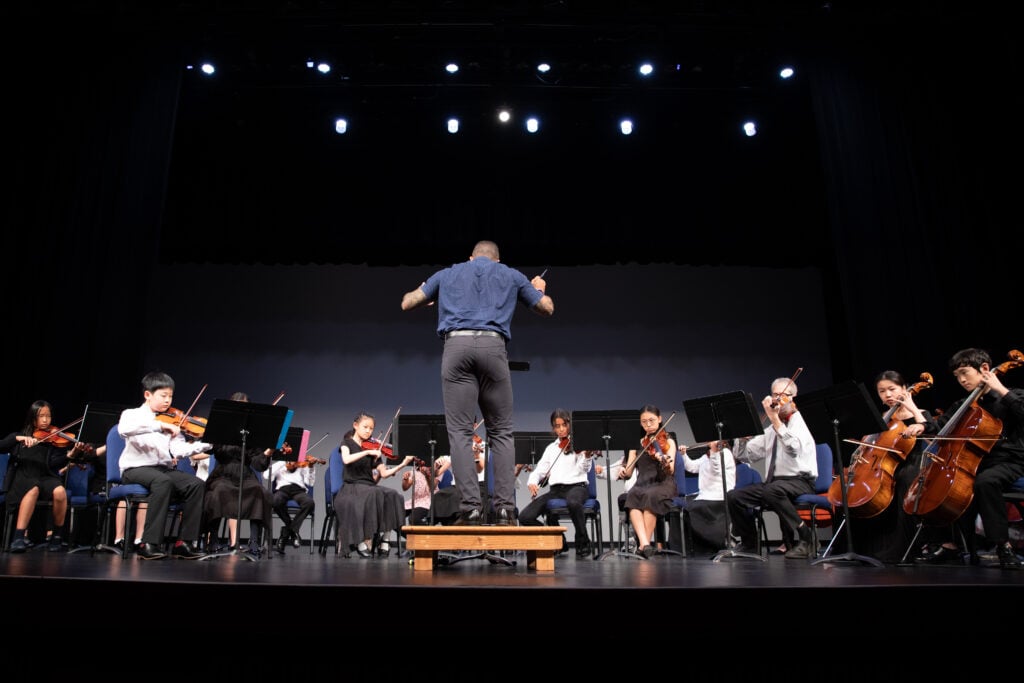
As students develop technique, rhythm, note-reading, and listening skills, they can begin making music with other people. Some may add a group program while continuing private lessons. Others may become ready for chamber ensembles, collaborative performances, or the San Ramon Youth String Orchestra.
Playing with other musicians introduces a new set of skills. Students must listen closely, maintain their part, follow a shared tempo, and respond to what is happening around them.
Chamber ensembles and orchestra are usually later steps rather than programs for first-day beginners. For example, the San Ramon Youth String Orchestra has specific technical requirements. Private instruction can help young musicians gradually build toward that level while continuing to grow at an appropriate pace.
This means families don’t have to search for a new musical community every time their child reaches another stage. A beginner can start with a single teacher and grow into recitals, ensembles, and larger performances when the time is right.
Which Beginner Music Program Is Right for Your Child?
Private lessons are usually the strongest choice when a student has a particular instrument in mind, benefits from individual attention, or wants to progress at their own pace.
A group class may be a better introduction for a younger child who is still exploring music or enjoys the energy of learning with peers. Some students eventually combine both, receiving personalized instruction while also experiencing collaborative music-making.
There is no single path every beginner has to follow. The best program is the one that helps the student feel supported, make meaningful progress, and want to return the following week.
FAQs
Do beginners need previous musical experience?
No. Lessons can begin with basic skills such as listening, rhythm, posture, note-reading, and producing the first clear sounds on an instrument.
What is the best music program for a beginner?
Private lessons are the best starting point for most beginners because the teacher can personalize the pace, music, and feedback. Group classes may suit younger children or students who prefer a social introduction.
How should we choose a beginner instrument?
Start with the sounds and instruments that naturally interest the student. Age, physical comfort, practice access, and the connection with the teacher should also influence the decision.
Can beginners take lessons virtually?
Yes. SRAM offers virtual lessons for families who prefer to learn remotely or need greater scheduling flexibility.
Not Sure Where Your Child Should Start?
You don’t need to have the instrument, teacher, and lesson format figured out before reaching out. Private lessons are a great starting point for most beginners, but the right fit still depends on your child’s interests, age, and how they learn.
Book a music consultation with James Daly, our Academy Director. He’ll talk with you about what your child enjoys, answer your questions, and help you find a teacher and program that feel right. From there, you can decide on the next step that makes sense for your family.
